
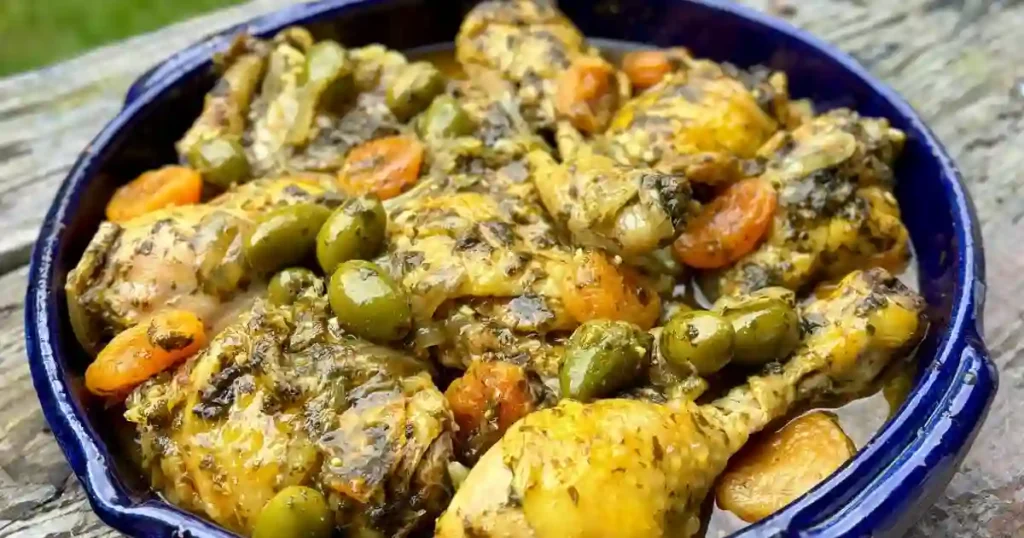
If you have been searching for an authentic Moroccan chicken tagine recipe that actually delivers deep flavor without complicated steps, this is it. Chicken tagine is one of those dishes that feels special but familiar at the same time. It simmers slowly, fills the kitchen with warm spice aromas, and somehow tastes even better the next day. That alone tells you it is doing something right.
This Moroccan chicken tagine recipe uses tender chicken thighs, preserved lemon, green olives, and a balanced spice blend that builds flavor gradually instead of overwhelming your palate. It is comforting, rich, and surprisingly practical for home cooks. Whether you are new to Moroccan food or simply want to expand your chicken dinner options, this dish meets you where you are.
By the end of this guide, you will understand not just how to make chicken tagine, but why each step matters. The result is a meal that feels thoughtful, intentional, and deeply satisfying.
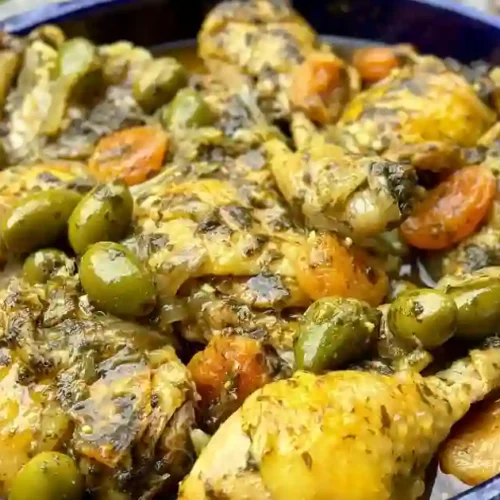
Moroccan Chicken Tagine

Ingredients
Main Ingredients
- 2 lb chicken thighs bone-in or boneless
- 1 large yellow onion thinly sliced
- 3 cloves garlic minced
- 1 tbsp fresh ginger grated
- 1 cup green olives pitted
- 1 preserved lemon rind only, finely chopped
- 1 can chickpeas drained and rinsed
- 0.5 cup dried apricots
- 1.5 cups chicken stock
- 2 tbsp olive oil
Spices
- 1.5 tsp ground cumin
- 1 tsp smoked paprika
- 1 tsp ground coriander
- 0.25 tsp cayenne pepper optional
- 2 bay leaves
- salt and black pepper to taste
Instructions
- Pat the chicken thighs dry and season generously with salt, black pepper, cumin, and paprika.
- Heat olive oil in a large pot or Dutch oven over medium heat. Add the sliced onions and cook until soft and lightly golden.
- Add garlic and ginger and cook until fragrant, about 30 seconds. Stir in coriander, cayenne, and bay leaves to bloom the spices.
- Add the chicken thighs and lightly brown on both sides, building flavor without fully cooking through.
- Pour in the chicken stock, then add chickpeas, dried apricots, green olives, and preserved lemon. Stir gently to combine.
- Cover, reduce heat to low, and simmer for 35–45 minutes until the chicken is tender and the sauce slightly thickened.
- Taste and adjust seasoning if needed. Garnish with fresh parsley and serve warm.
Notes
Table of Contents
Table of Contents
Why You’ll Love this Recipe
- Comforting but impressive
This chicken tagine feels like a warm, slow cooked hug, yet it looks and tastes special enough to serve guests without stress. - Balanced, not overpowering
The spices are warm and aromatic, not spicy or heavy. Preserved lemon and olives cut through the richness so every bite feels intentional. - One pot simplicity
Everything cooks in a single pot, which means less cleanup and more time enjoying the meal. - Better than most versions
Unlike many recipes that overdo sweetness or spice, this version focuses on balance. The chicken stays tender, the sauce stays light, and the flavors stay distinct. - Perfect for sharing
This is the kind of dish people remember. It invites conversation, seconds, and quiet compliments at the table.
What Is Moroccan Chicken Tagine?
Moroccan chicken tagine is both a dish and a cooking method. The word tagine refers to the conical clay pot traditionally used to cook slow simmered meals, but it also describes the finished dish itself. Over time, the name became synonymous with gently braised meats, layered spices, and sauces that feel almost silky by the end.
What sets chicken tagine apart from other chicken stews is balance. You get savory depth from onions and spices, brightness from preserved lemon, and a salty bite from olives. Some versions include dried fruit like apricots or dates, which add subtle sweetness without turning the dish into something sugary.
Chicken tagine is popular because it is adaptable. You can adjust spice levels, swap vegetables, or cook it in a standard pot if you do not own a tagine. The core idea stays the same: slow cooking, layered flavor, and respect for the ingredients.
Ingredients Needed
This chicken tagine recipe relies on simple ingredients that work together naturally. Nothing feels random, and each element has a purpose.
Main Ingredients
- Chicken thighs, bone in or boneless
- Yellow onion, finely sliced
- Garlic cloves, minced
- Fresh ginger, grated
- Green olives, pitted
- Preserved lemon, chopped
- Chickpeas, cooked
- Dried apricots
- Chicken stock or broth
- Fresh parsley for garnish
Spices
- Ground cumin
- Smoked paprika
- Ground coriander
- Cayenne pepper
- Bay leaves
- Salt and black pepper
Preserved lemon is one ingredient that truly defines Moroccan chicken tagine. If you skip it, the dish still works, but it loses its signature brightness. Many grocery stores carry it now, and it keeps well in the fridge.

How to Make Chicken Tagine Step by Step
This method is simple and forgiving, which is why chicken tagine works so well for home cooks.
Step 1: Season the Chicken
Pat the chicken dry and season it generously with salt, pepper, cumin, and paprika. This early seasoning helps flavor the meat from the inside out.
Step 2: Sauté the Aromatics
Heat olive oil in a large pot over medium heat. Add the onions and cook until soft and lightly golden. Stir in garlic and ginger, cooking just until fragrant.
Step 3: Bloom the Spices
Add coriander, cayenne, and bay leaves to the pot. Stir for about thirty seconds. This step releases aroma and deepens the spice flavor.
Step 4: Brown the Chicken
Add the chicken to the pot and lightly brown both sides. You are not cooking it through here, just building flavor.
Step 5: Build the Sauce
Pour in chicken stock, then add chickpeas, apricots, olives, and preserved lemon. Stir gently to combine.
Step 6: Simmer Slowly
Cover the pot and reduce heat to low. Let the chicken tagine simmer until the chicken is tender and the sauce thickens slightly.
Step 7: Garnish and Serve
Finish with fresh parsley and a squeeze of lemon if needed. Taste and adjust seasoning before serving.
Tips for the Best Chicken Tagine
Small adjustments make a big difference with this dish.
- Use chicken thighs instead of breasts for better texture
- Do not rush the simmering stage
- Taste at the end and adjust salt carefully due to olives and preserved lemon
- Let the dish rest for a few minutes before serving
Chicken tagine often tastes even better the next day, which makes it ideal for meal prep or leftovers.
What to Serve With Chicken Tagine
Chicken tagine has deep, layered flavors, so the best sides are simple, neutral, and good at soaking up sauce. You want support, not competition.
Couscous
This is the most traditional and natural pairing.
- Light, fluffy texture absorbs the sauce beautifully
- Neutral flavor balances the spices
- Quick to prepare and easy to portion
If you want to elevate it slightly, stir in a little olive oil, lemon zest, or chopped parsley after steaming.
Rice
Rice works especially well if couscous is not your thing.
- Basmati or jasmine rice keeps the dish light
- Plain rice lets the tagine shine
- Great for meal prep and leftovers
Avoid heavily seasoned rice, as it can clash with the tagine spices.
Moroccan or Flatbread
Bread is essential if you love sauce.
- Moroccan khobz, pita, or naan all work
- Ideal for scooping up chicken and sauce
- Makes the meal feel more communal and relaxed
Warm the bread just before serving for best texture.
Simple Salads
A fresh salad adds contrast and keeps the meal balanced.
Good options include:
- Cucumber and tomato salad with lemon and olive oil
- Carrot salad with cumin and citrus
- Mixed greens with a light vinaigrette
Avoid creamy dressings, which can overpower the dish.
Roasted or Steamed Vegetables
If you want something warm on the side, keep it minimal.
- Roasted carrots, zucchini, or cauliflower
- Lightly seasoned green beans
- Steamed vegetables with olive oil and salt
The goal is texture and freshness, not bold seasoning. competition.
Quick Serving Tip
If your chicken tagine includes apricots or olives, keep the sides extra simple. If the tagine is more savory and minimal, you can afford a slightly more interesting side like herbed couscous or spiced carrots.
What to Store With Chicken Tagine
this recipe stores very well, but it should be stored separately from most sides to preserve texture and flavor.
Store the Chicken Tagine Itself Like This
- Store chicken tagine in an airtight glass or BPA free container
- Make sure the chicken is fully submerged in its sauce
- Let it cool completely before refrigerating
- Refrigerate for up to 3 to 4 days
- Freeze for up to 3 months
The sauce actually protects the chicken, which is why tagine often tastes better the next day.
What Can Be Stored Together With Chicken Tagine
These items store well separately but alongside the tagine in the fridge or freezer:
Cooked Rice or Couscous
- Store in a separate airtight container
- Refrigerate up to 3 days
- Reheat with a splash of water to restore moisture
Flatbread or Pita
- Store at room temperature for 1 to 2 days, or freeze
- Do not refrigerate bread, as it dries out faster
Roasted Vegetables
- Carrots, zucchini, or cauliflower store well
- Keep them in a separate container
- Refrigerate up to 3 days
What You Should NOT Store With Chicken Tagine
Avoid storing these inside the same container as the tagine:
- Couscous or rice mixed into the sauce
- Fresh herbs like parsley or cilantro
- Salads or raw vegetables
- Yogurt or dairy toppings
These either become mushy or lose freshness when stored in the sauce.
Best Way to Reheat Stored Chicken Tagine
- Reheat slowly on the stovetop over low heat
- Add a small splash of water or stock if the sauce thickens
- Stir gently to avoid breaking the chicken
Microwaving is fine, but cover loosely and reheat in short intervals.
Quick Storage Tip
If you are meal prepping, portion the chicken tagine and sauce together, then store sides separately. Combine only when reheating or serving.
Nutrition (Approximate Per Serving)
- Calories: 420 to 480 kcal
- Protein: 32 to 36 g
- Fat: 22 to 26 g
- Carbohydrates: 20 to 25 g
- Fiber: 4 to 6 g
- Sodium: Moderate due to olives and preserved lemon
Nutrition will vary depending on portion size, chicken cut, and how much oil is used. Serving with couscous or rice will increase carbohydrates.
Helpful Notes
- Chicken thighs work best
Thighs stay juicy during slow cooking. Chicken breasts can dry out if overcooked. - Preserved lemon matters
This ingredient adds depth, not just acidity. If substituting fresh lemon, use less and add it at the end. - Do not rush the simmer
Low and slow cooking allows the flavors to meld properly and keeps the chicken tender. - Taste at the end, not the beginning
Olives and preserved lemon release salt as they cook, so adjust seasoning only after simmering. - Even better the next day
The flavors deepen overnight, making this an excellent make ahead meal.
Frequently Asked Questions
Can I Make Chicken Tagine Ahead of Time?
Yes. Chicken tagine is one of those dishes that improves with time. Store it in the refrigerator and gently reheat the next day.
Can I Freeze Chicken Tagine?
Yes. Let it cool completely, then freeze in airtight containers for up to three months.
Is Chicken Tagine Spicy?
Not traditionally. It is warm and aromatic rather than hot. You can adjust cayenne to your preference.
Is Chicken Tagine Authentic Without a Tagine Pot?
Yes. While a traditional tagine pot is wonderful, it is not required. A heavy Dutch oven or deep skillet with a lid works very well. The key is trapping moisture so the chicken cooks gently and stays tender.
What is the secret ingredient in tagine?
he real secret ingredient in tagine is time and gentle cooking, but flavor-wise, it is often preserved lemon. Preserved lemon adds a deep, slightly salty citrus note that fresh lemon simply cannot replicate. Combined with olives and slow simmering, it creates that unmistakable tagine taste that feels rich, layered, and comforting.
What spices are essential for chicken tagine?
The most essential spices for chicken tagine are ground cumin, coriander, paprika, and black pepper. Cumin provides warmth, coriander adds a subtle citrusy note, and paprika brings depth and color. A small pinch of cayenne or chili can be added for gentle heat, while bay leaves help round out the overall aroma during slow cooking.
What is the secret to a good tagine?
The secret to a good tagine lies in building flavor gradually. Start by gently cooking onions, garlic, and spices to release their aromas before adding the chicken. Using enough liquid to create steam, covering the dish, and cooking slowly over low heat allows the ingredients to meld together. Rushing the process is the fastest way to lose the authentic tagine texture and flavor.
Conclusion
Moroccan chicken tagine is the kind of recipe that earns its place in your kitchen. It is comforting without being boring, flavorful without being overwhelming, and flexible enough to fit your routine. Once you make it, you start to understand why it has lasted for generations.
This recipe is not about perfection. It is about patience, balance, and enjoying the process as much as the final dish. If you are looking for a meal that feels both grounded and special, this one delivers every time.
For more delicious and easy recipes, follow me on Facebook and Pinterest
