
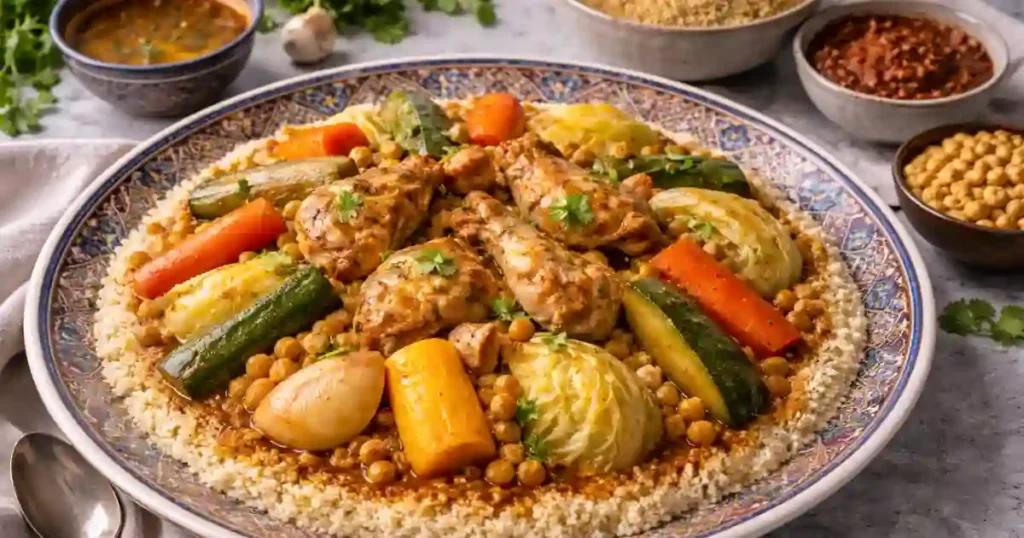
Moroccan chicken couscous is not just a recipe. It is a statement. If you are searching for an authentic Moroccan chicken couscous, you probably want more than boiled grains and chicken on top. You want flavor that builds slowly, vegetables that hold their shape, and couscous that feels light instead of heavy. This guide walks you through the traditional method while keeping it clear, practical, and achievable in a modern kitchen.
Authentic Moroccan Chicken Couscous

Ingredients
For the Couscous
- 3 cups medium grain semolina couscous not instant
- 1 tsp salt divided
- 2 tbsp olive oil
- 1 cup water for moistening during steaming, as needed
For the Chicken and Vegetable Broth
- 2 lb bone-in chicken pieces
- 1 large onion chopped
- 2 medium carrots halved
- 2 medium zucchini halved
- 2 cups pumpkin or squash cut into wedges
- 1 medium turnip peeled
- 1 cup dried chickpeas soaked overnight
- 1 small bunch fresh parsley and cilantro tied together
- 1 tsp ground turmeric
- 1 tsp ground ginger
- 1 tsp black pepper
- 2 tbsp olive oil
- 8 cups water or enough to cover ingredients
Instructions
- Heat olive oil in the bottom pot of a couscoussier. Add chopped onion and chicken pieces, browning lightly for several minutes.
- Add turmeric, ginger, black pepper, salt, soaked chickpeas, tied herbs, and water. Bring to a gentle simmer.
- Add carrots and turnips first. Simmer for about 30 minutes before adding zucchini and pumpkin later in the cooking process.
- Place dry couscous in a large bowl. Sprinkle lightly with water and rub between your palms to separate grains. Mix in olive oil.
- Transfer couscous to the steamer and steam for 20 minutes until steam rises through the grains.
- Remove couscous to a bowl. Sprinkle lightly with salted water while fluffing by hand. Break up clumps and return to steam for another 20 minutes.
- Repeat fluffing once more with a small amount of water and steam a third time for 15–20 minutes until light and fluffy.
- To serve, spread couscous onto a large platter. Arrange chicken in the center and vegetables around. Spoon warm broth over the top and serve extra broth on the side.
Notes
Why You’ll Love This Moroccan Chicken Couscous Recipe
- Simple ingredients, bold flavor
You do not need complicated or hard to find components. Basic vegetables, warm spices, and good chicken transform into something deeply aromatic and satisfying. - Traditional steaming technique
Unlike quicker versions, this Moroccan chicken couscous uses the triple steaming method, giving you light, fluffy grains instead of dense or soggy couscous. - Perfect for family gatherings
Served on one large platter, it instantly creates a sense of togetherness. It feels generous. Abundant. Made to share. - Balanced and nourishing
Lean protein, fiber rich vegetables, and slow absorbed semolina make it hearty without feeling heavy. - A true crowd pleaser
The flavors are warm and comforting rather than spicy, making it accessible even for guests unfamiliar with Moroccan cuisine. - Impressive without being flashy
When you bring this to the table, it looks like you spent all day cooking. In reality, it is more about patience than difficulty.
There is something deeply comforting about lifting that first spoonful and seeing the steam rise. It feels like home, even if you did not grow up with it.
What Is Moroccan Chicken Couscous?
Moroccan chicken couscous is more than a comfort meal. In Morocco, it is tradition, rhythm, and memory served on a single wide plate. If you are searching for an authentic Moroccan chicken couscous recipe, chances are you want the real version. Not instant couscous soaked in hot water. Not a rushed weeknight shortcut. The real steamed, fragrant, deeply layered dish.
At its core, Moroccan chicken couscous is made by steaming semolina grains over a broth simmered with chicken, chickpeas, and seasonal vegetables. The steam rises, carrying spice and aroma upward into the grains. That is the secret. The couscous does not boil. It absorbs flavor slowly, gradually, almost patiently.
Here is the clear definition:
Moroccan chicken couscous is a traditional North African dish where semolina grains are steamed multiple times over a spiced chicken and vegetable broth, then served communally with meat and vegetables arranged on top.
If you have ever wondered why restaurant couscous tastes lighter and fluffier than quick boxed versions, the triple steaming method is why.
Why Is It Traditionally Served on Fridays?
Friday couscous in Morocco is not random. After midday prayer, families gather. The dish is placed in the center. Everyone eats from the same platter. It signals rest, connection, and continuity. Food becomes social glue.
Is Moroccan Chicken Couscous Hard to Make?
It looks complicated. It really does. But once you understand the steaming cycle, the process becomes rhythmic. Steam. Fluff. Steam again. Each round improves texture. Each step builds flavor. It feels intimidating until suddenly it does not.
Ingredients for Authentic Moroccan Chicken Couscous
The beauty of Moroccan chicken couscous is balance. Earthy vegetables. Tender chicken. Warm spices. Soft grains. Everything plays a role.
Core Ingredients
For the couscous:
- 2 to 3 cups medium grain semolina couscous, not instant
- Water
- Salt
- Olive oil or smen
For the chicken and vegetable broth:
- 1 whole chicken cut into pieces or 2 pounds bone in chicken
- 1 large onion, chopped
- 2 carrots, halved
- 2 zucchini, halved
- 1 small pumpkin or squash wedge
- 1 turnip, peeled
- 1 cup soaked chickpeas
- Fresh parsley and cilantro tied together
- 1 teaspoon turmeric
- 1 teaspoon ground ginger
- 1 teaspoon black pepper
- Salt to taste
- Olive oil
- Water to cover
Optional additions:
- Cabbage wedges
- Sweet potato
- Fresh fava beans
- Green chili
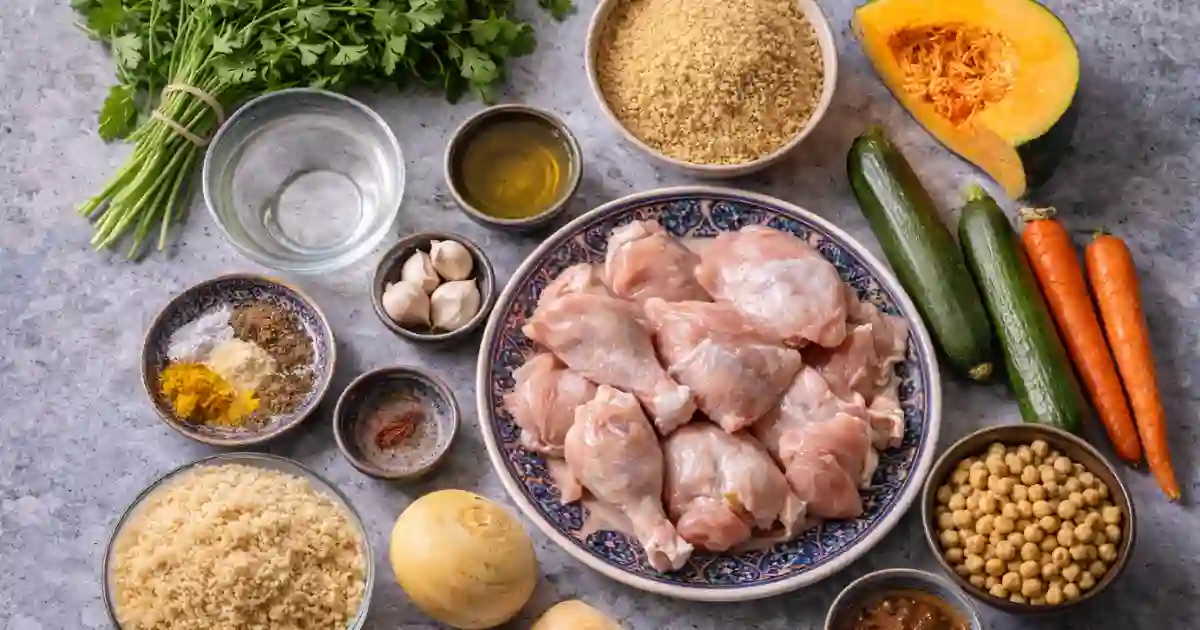
Traditional Moroccan couscous with seven vegetables may include pumpkin, carrots, zucchini, cabbage, turnips, chickpeas, and onions. The number seven is symbolic, but flexibility is common depending on season.
Why These Spices Matter?
Turmeric gives warmth and color. Ginger adds depth without heat. Black pepper sharpens the broth. The flavor profile is aromatic, not spicy. It is comforting, not aggressive.
Can You Substitute Vegetables?
Yes. Moroccan couscous is seasonal by nature. If you cannot find turnips, use parsnips. If pumpkin is out of season, use butternut squash. The structure matters more than rigid adherence.
How to Make Moroccan Chicken Couscous Step by Step
The traditional tool is a couscoussier, a two level pot where broth simmers below and couscous steams above. If you do not have one, a steamer basket over a large pot can work.
Step 1: Start the Broth
In the bottom pot, heat olive oil. Add onion and chicken pieces. Lightly brown for a few minutes. Add turmeric, ginger, pepper, salt, herbs, and soaked chickpeas. Cover with water. Bring to a gentle simmer.
Add the hardest vegetables first, such as carrots and turnips. Simmer about 30 minutes.
Step 2: Prepare the Couscous First Steam
Place dry couscous in a large bowl. Sprinkle lightly with water and rub between your palms to separate grains. Add a spoon of olive oil and mix again. Transfer to the top steamer.
Steam for about 20 minutes until steam rises through the grains.
Step 3: Fluff and Steam Again
Remove couscous to a bowl. Sprinkle salted water gradually while fluffing by hand. Break up clumps. Return to steamer for another 20 minutes.
Meanwhile, add softer vegetables like zucchini and pumpkin to the broth.
Step 4: Final Steam
Repeat fluffing once more with a small amount of water. Steam a third time for 15 to 20 minutes. This triple steaming creates light, fluffy Moroccan couscous.
Why Is Couscous Steamed Three Times?
Steaming three times allows the grains to hydrate gradually without becoming sticky. Each round separates the grains further. The result is airy, individual pearls rather than dense clumps.
Can You Make Moroccan Couscous Without a Couscoussier?
Yes, although purists may disagree. A large pot with a tight fitting steamer basket can replicate the effect. Seal gaps with a clean kitchen towel to prevent steam escape.
Instant couscous can be used in emergencies. Pour boiling broth over it, cover, and let sit. The flavor will still be good, but the texture will be softer and less structured.
If authenticity is your goal, steaming is worth the effort.
The Seven Vegetables in Moroccan Couscous Explained
Traditional Moroccan couscous with seven vegetables varies by region. In cities like Casablanca, cabbage and pumpkin are common. In rural areas, seasonal produce dictates choices.
Common vegetables include:
- Carrots
- Zucchini
- Pumpkin or squash
- Turnips
- Chickpeas
- Cabbage
- Onions
Seven symbolizes abundance and blessing rather than strict counting.
Common Mistakes When Making Moroccan Chicken Couscous
Even experienced cooks occasionally struggle with texture.
Mistake 1: Mushy Couscous
Usually caused by too much water during fluffing. Add moisture gradually.
Mistake 2: Bland Broth
Do not under salt. The couscous absorbs seasoning. Taste the broth before final steaming.
Mistake 3: Overcooked Vegetables
Add softer vegetables later in the cooking process to maintain structure.
Serving and Storage Tips
How to Serve Moroccan Chicken Couscous Beautifully
Presentation matters more than we sometimes admit. Moroccan chicken couscous is traditionally served on a large round platter, not individual plates. The couscous forms the base. The chicken is arranged in the center. Vegetables are placed carefully around the edges. Finally, warm broth is spooned gently over the top.
To elevate your serving:
- Use a wide shallow serving dish to allow even layering.
- Ladle broth gradually so the couscous absorbs flavor without becoming soggy.
- Garnish with extra chickpeas on top for visual contrast.
- Serve additional broth on the side so guests can adjust moisture to their liking.
- Pair with buttermilk or mint tea for a more traditional experience.
If hosting guests, bring the platter to the table whole. It creates impact and encourages a shared dining atmosphere.
How to Store and Reheat Properly
To maintain quality, store couscous and broth separately.
Refrigeration:
- Store in airtight containers for up to 3 days.
- Keep vegetables and chicken in broth to prevent drying.
Freezing:
- Freeze broth with chicken and vegetables for up to 3 months.
- Freeze couscous separately to preserve texture.
Reheating:
- Reheat broth gently on the stovetop.
- Sprinkle a few tablespoons of water over couscous before reheating.
- Steam or microwave covered to restore softness.
Avoid overheating. Couscous dries quickly if exposed to high heat without moisture.
Helpful Notes for Perfect Moroccan Chicken Couscous
A few small adjustments can make a noticeable difference in your final dish.
- Always soak dried chickpeas overnight for better texture and digestibility.
- Taste the broth before the final steam. Adjust salt at this stage, not after serving.
- Add softer vegetables later in cooking to prevent overcooking.
- Fluff couscous gently by hand instead of stirring with a spoon. This keeps grains separate.
- If the couscous feels dense after steaming, sprinkle lightly with water and steam an additional 5 minutes.
For variation:
- Substitute lamb for a richer, more traditional flavor.
- Add caramelized onions and raisins for a sweet topping variation.
- Use whole wheat couscous for added fiber and a slightly nutty taste.
The key to mastering Moroccan chicken couscous is patience. The steaming process may feel repetitive, but each round improves texture and depth. Once you understand that rhythm, the dish becomes far less intimidating and far more rewarding.
Nutrition Information
Per serving approximate values:
- Calories: 450 to 550
- Protein: 30 grams
- Carbohydrates: 55 grams
- Fat: 15 grams
Values vary depending on portion size and ingredients used.
Frequently Asked Questions About Moroccan Chicken Couscous
Is Moroccan Chicken Couscous Gluten Free?
No. Traditional couscous is made from semolina wheat. For gluten free versions, some use millet or gluten free couscous alternatives, but texture differs.
Can You Freeze Moroccan Couscous?
Yes. Store couscous and broth separately in airtight containers for up to three months. Reheat with added moisture.
What Meat Is Most Traditional?
Lamb is very traditional, especially for special occasions. Chicken is common for weekly Friday meals due to affordability.
Can I make Moroccan chicken couscous without a couscoussier?
Yes, you can. While a traditional couscoussier gives the most authentic texture because the steam circulates evenly through the semolina, a large pot with a tight fitting steamer basket works surprisingly well. The key is sealing the edges so steam does not escape. You can wrap a clean kitchen towel around the rim before placing the lid. The result may not be identical to the classic Moroccan method, but it will still be light, fluffy, and deeply flavorful if you follow the triple steaming process carefully.
Why is couscous steamed three times instead of once?
Steaming Moroccan chicken couscous three times allows the grains to hydrate gradually without becoming sticky or dense. After each steam, you fluff and moisten the couscous slightly, which separates the grains and improves texture. If you only steam it once, the inside may stay dry while the outside turns mushy. The repetition might seem excessive at first, but this technique is what gives traditional Moroccan couscous its signature airy consistency.
What vegetables are traditionally used in Moroccan chicken couscous?
Classic Moroccan couscous often includes carrots, zucchini, pumpkin or squash, turnips, cabbage, chickpeas, and onions. However, the exact combination can vary depending on season and region. Some families add sweet potatoes or fava beans. The idea of “seven vegetables” symbolizes abundance rather than strict rules. As long as you balance root vegetables with softer ones and cook them in stages, you will achieve an authentic and well structured result.
Conclusion
Authentic Moroccan chicken couscous is not fast food. It requires attention, repetition, and patience. But that is precisely what makes it meaningful. Each steaming builds texture. Each vegetable adds depth. Each spoonful carries history from Morocco to your table.
If you were searching for a traditional Moroccan chicken couscous recipe that balances authenticity with clarity, this method delivers both. Once you try it the traditional way, it is difficult to go back to shortcuts.
For more delicious and easy recipes, follow me on Facebook and Pinterest
