
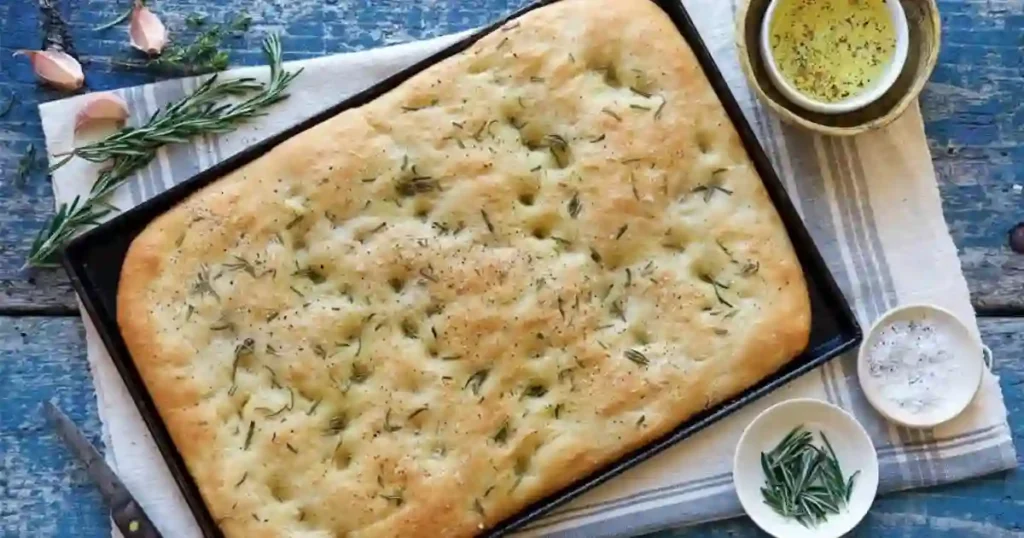
If you are looking for an overnight focaccia recipe that delivers bakery style results without complicated steps, you are in the right place. This overnight focaccia recipe uses cold fermentation to create deep flavor, airy structure, and a crisp olive oil crust with very little effort.
There is something deeply satisfying about pulling homemade focaccia from the oven. The surface is golden. The edges are slightly crisp. The center is soft and full of airy pockets. It feels impressive, yet the process is surprisingly simple. Four basic ingredients. No kneading. Minimal hands on time.
This refrigerator focaccia method is ideal for busy schedules because the dough develops slowly in the fridge. The result is better flavor, stronger gluten structure, and a texture that feels artisan rather than rushed. If you have ever struggled with dense bread or sticky dough, this guide will walk you through each step clearly and calmly.
By the end, you will understand not only how to make overnight focaccia, but why the technique works.
Overnight Focaccia

Ingredients
Dough
- 4 cups all purpose flour or bread flour
- 2 tsp kosher salt
- 2 tsp instant yeast
- 2 cups water room temperature
- olive oil for coating pan and topping
- flaky sea salt for finishing
- fresh rosemary or herbs optional
Instructions
- In a large bowl, mix flour, salt, and instant yeast.
- Add room temperature water and stir until a sticky, shaggy dough forms.
- Drizzle olive oil over the surface, cover tightly, and refrigerate for at least 12 hours or up to 48 hours.
- Generously oil a 9×13 inch pan. Transfer the dough into the pan and gently stretch toward the corners.
- Cover and let rise at room temperature for 2 to 4 hours until visibly puffy.
- Drizzle more olive oil over the top and press fingertips deeply into the dough to create dimples.
- Sprinkle with flaky sea salt and herbs if desired.
- Bake at 425°F (220°C) for 25 to 30 minutes until deeply golden and crisp on the edges.
- Cool slightly before slicing and serving.
Notes
Table of Contents
Table of Contents
Why You’ll Love This Overnight Focaccia Recipe
- Effortless but Impressive – This overnight focaccia recipe looks and tastes bakery level, yet it requires no kneading and only a few minutes of active work.
- Deep, Complex Flavor – The cold fermentation develops a rich, slightly nutty taste that quick rise versions simply cannot match.
- Perfectly Airy Texture – Thanks to the high hydration dough, you get those beautiful airy pockets and a soft interior with crisp, golden edges.
- Simple Pantry Ingredients – Just flour, water, yeast, salt, and olive oil. Nothing fancy, just technique.
- Crowd Pleaser – Whether served at dinner, alongside pasta, or as sandwich bread, it always disappears fast.
What truly sets this refrigerator focaccia apart is the slow rise. Time does the work instead of extra effort. The result feels comforting, rustic, and quietly impressive. It is the kind of bread that makes guests ask for the recipe.
ngredients for Overnight Focaccia
This overnight focaccia recipe uses simple pantry ingredients, but the ratios matter. The high hydration dough is what gives this bread its signature airy crumb.
- 4 cups all purpose flour or bread flour
- 2 teaspoons kosher salt
- 2 teaspoons instant yeast
- 2 cups room temperature water
- Olive oil for coating and topping
- Flaky sea salt for finishing
- Optional fresh rosemary or herbs

Using bread flour will give slightly more chew, while all purpose flour creates a softer crumb. Both work well for refrigerator focaccia.
Why There Is No Sugar in This Focaccia
Unlike quick rise breads, this cold fermented focaccia does not need added sugar. During the long refrigeration, natural enzymes break down starches into sugars. This feeds the yeast slowly and improves both flavor and browning.
How to Make Overnight Focaccia Step by Step
Making overnight focaccia is more about timing than effort. The refrigerator does most of the heavy lifting.
- In a large bowl, mix flour, salt, and yeast.
- Add water and stir until a sticky dough forms. It will look wet and uneven. That is correct.
- Drizzle olive oil over the surface. Cover tightly.
- Refrigerate for at least 12 hours, up to 48 hours.
- Generously oil a 9 by 13 inch pan.
- Transfer the dough into the pan and gently stretch it toward the corners.
- Cover and let rise at room temperature for 2 to 4 hours until puffy.
- Drizzle more olive oil on top and press your fingertips deeply into the dough to create dimples.
- Sprinkle with flaky salt and herbs.
- Bake at 425 degrees Fahrenheit for 25 to 30 minutes until golden brown.
The high hydration dough creates steam during baking, which forms large air pockets and a tender interior. That is the secret to airy focaccia.
How Do You Know When Focaccia Is Done?
The top should be deeply golden and the bottom should sound hollow when tapped. Internal temperature should reach about 200 degrees Fahrenheit.
Why Cold Fermentation Makes Better Focaccia
Cold fermentation is what sets this overnight focaccia recipe apart from faster methods. During refrigeration, yeast works slowly. This extended time allows flavor compounds to develop fully.
The long rest also strengthens gluten naturally. Instead of kneading aggressively, time builds structure. This results in a bread that feels both airy and sturdy.
Another advantage of refrigerator focaccia is convenience. You can prepare the dough one day and bake it the next. This flexibility makes it ideal for gatherings, meal prep, or weekend baking.
Quick Rise vs Overnight Focaccia
Quick rise focaccia can be ready in a few hours, but the flavor tends to be milder and the crumb tighter. Overnight focaccia develops complexity and a more open texture.
Common Focaccia Mistakes and How to Fix Them
Even simple bread recipes can go wrong without small adjustments. Here are the most common issues.
Dense Texture
This usually happens when the dough has not risen long enough after refrigeration. Allow the second rise to continue until visibly puffy.
Flat Focaccia
If the dough spreads too thin, your pan may be too large. Stick to a standard 9 by 13 inch pan for best thickness.
Pale Crust
Ensure your oven is fully preheated. Proper heat is essential for browning and oven spring.
Variations and Topping Ideas
Once you master the base overnight focaccia recipe, variations become easy.
- Rosemary and flaky sea salt
- Sliced cherry tomatoes with olive oil
- Caramelized onions
- Roasted garlic cloves
- Olives and thyme
You can also slice cooled focaccia horizontally and use it for sandwiches. The airy crumb holds fillings beautifully.
Serving Tips
- Serve warm with high quality olive oil and balsamic vinegar for dipping.
- Slice into squares and pair with soups, stews, or pasta dishes.
- Cut horizontally and use for pressed sandwiches or paninis.
- Top with fresh burrata and basil for an elegant appetizer presentation.
- Warm leftovers briefly in the oven before serving to restore crisp edges.
For gatherings, sprinkle a little extra flaky salt and fresh herbs right before serving to enhance aroma and visual appeal.

Storage and Reheating
Store focaccia at room temperature in an airtight container for up to 2 days. For longer storage, freeze slices individually wrapped.
To reheat, warm in a 350 degree oven for 8 to 10 minutes. This restores crisp edges and soft interior texture.
Helpful Notes
- Sticky Dough Is Normal – This overnight focaccia dough is meant to be sticky. Use olive oil on your hands instead of extra flour.
- Longer Fermentation Equals More Flavor – If time allows, let the dough rest closer to 24 to 48 hours for deeper flavor.
- Use Generous Olive Oil – Do not skimp. The oil creates that signature crisp bottom crust.
- Room Temperature Matters – Allow enough time for the second rise after refrigeration. The dough should look visibly puffy before baking.
- Pan Size Affects Thickness – A standard 9 by 13 inch pan gives ideal height and structure.
These small details are what transform a simple overnight focaccia recipe into something consistently airy, flavorful, and memorable.
Nutrition Information
Estimated per serving:
- Calories: 210
- Carbohydrates: 36 grams
- Protein: 6 grams
- Fat: 5 grams
- Sodium: Varies depending on salt
Values are approximate and depend on flour type and oil quantity.
Conclusion
This overnight focaccia recipe proves that excellent bread does not require complicated techniques. With a simple high hydration dough and cold fermentation, you can create bakery quality focaccia at home.
Refrigerator focaccia rewards patience. The flavor deepens. The texture improves. The process becomes almost effortless once you understand it. If you have hesitated to try homemade bread before, this is the recipe that changes that.
Bake it once and you will likely return to this overnight focaccia recipe again and again.
Frequently Asked Questions
How long should I refrigerate overnight focaccia dough?
For best results, refrigerate the overnight focaccia dough for at least 12 hours, but ideally 24 hours. This extended cold fermentation improves flavor, texture, and gluten structure. You can leave it in the fridge for up to 48 hours without issues. The longer rest usually creates a more complex taste and larger air pockets. Just make sure the bowl is tightly covered so the surface does not dry out.
Why is my overnight focaccia dense instead of airy?
Dense focaccia usually happens for one of three reasons: the dough did not rise long enough after refrigeration, too much flour was added during handling, or the dough was overworked. This is a high hydration focaccia recipe, so stickiness is normal. Let the dough become visibly puffy during the second rise before baking. Patience during this stage makes a noticeable difference.
Can I freeze baked focaccia?
Yes, you can freeze overnight focaccia successfully. Allow it to cool completely, then wrap tightly and freeze for up to two months. To reheat, place it in a 350 degree oven for about 8 to 10 minutes. This helps restore the crisp edges and soft interior texture without drying it out.
Can I use active dry yeast instead of instant yeast?
Yes. If using active dry yeast, dissolve it in the water first and let it sit for 5 to 10 minutes until foamy. Then mix with the flour and salt as directed.
Why is my dough so sticky?
Overnight focaccia dough is intentionally sticky because it contains a high percentage of water. Resist the urge to add extra flour. Instead, use olive oil on your hands when handling it.
Can I refrigerate the dough for 48 hours?
Yes. Many bakers find that 24 to 48 hours produces the best flavor. Just ensure the bowl is well covered to prevent drying.
Why are there no big air pockets?
Air pockets form from strong gluten and proper fermentation. Do not rush the refrigeration step, and avoid overhandling the dough.
Can I add toppings before refrigeration?
It is best to add toppings just before baking to prevent excess moisture from affecting the dough.
For delicious and easy recipes, follow me on my Facebook and Pinterest
